Current PhD Students on the Job Market
 |
Daphne Fietz, M.F.A., M.A. | Sociology is a Ph.D. candidate at the Department of Sociology. Drawing on fieldwork with climate resistance groups in Germany, the UK, and the US, her dissertation, Resisting the End Times: Agency, Temporality, Transcendence, explores how communities sustain agency and meaning when the future horizons contract. She develops a framework of temporal orientations—problem-solving, duty/practice, and existential—to analyze how actors pivot between orientations and refunction traditionally embedded concepts, such as strategy, in the process. The project aims to provincialize modern assumptions about political action by analyzing how different temporal grammars shape practices of resistance. Her broader interests lie in social and political theory, comparative-historical method, crisis, resistance, and modernity. Daphne Fietz received an MFA from the Kunstakademie Düsseldorf and an MSc (with distinction in all subjects) in Sociology from the London School of Economics. She was awarded three Hobhouse Memorial Prizes for her performance and her master’s dissertation, Ordinary Liberals versus Brexit Britain: The Re-Creation of Liberal Order via Moral and Ethical Operations, which studied liberal meaning-making in a moment of crisis. At Yale, she was awarded the Sterling Prize Fellowship as the best candidate of the Graduate School of Arts and Sciences, and spent a year at Cambridge University as a Fox Fellow. She is affiliated with the ASA Theory, Culture and Political Sociology sections, the European Studies Center at Yale, and the Association for Protest and Movement Research (ipb). Publications: Fietz, D. (forthcoming). Making Meaning of Crisis: Unpacking Crisis Consciousness and Response through Mannheim’s Generational Theory. Journal of Classical Sociology. ______. (2021). Integrating Meaningful Selfhood into the Sociological Study of Political Languages: Blending Mead’s Pragmatism and Taylor’s Hermeneutics. The American Sociologist. https://doi.org/10.1007/s12108-021-09514-z ______. (2019). Rational High Ground or Compromise? Liberal Strategies for Coping with Brexit. LSE BREXIT. https://blogs.lse.ac.uk/brexit/2019/09/20/rational-high-ground-or-compromise-liberal-strategies-for-coping-with-brexit/ Degree: M.F.A., M.A. |
|
|
|
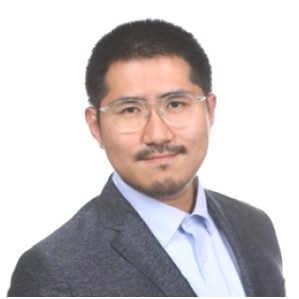
Dissertation: The Paradox of Deservingness: Three Essays on High-Skilled Immigration to the United States Email: milly.yang@yale.edu Research Areas: Stratification & Inequality, Immigration, Family Demography, Labor Market, Race/Ethnicity, China, Organizations Fields of Interest: High-Skilled Immigration; Immigration Policy/Law; Family Demography; Transnational Mobility Milly Yang is a sociology PhD Candidate at Yale University. As a sociologist and social demographer, she examines how state and family institutions shape social stratification in a globalized world. Much of this work lies at the intersection of immigration, family demography, the labor market, and inequality. Her dissertation examines how U.S. immigration policy and employer practices shape the experiences of high-skilled immigrants. She examines a central puzzle: in a system that claims meritocracy and in a society that prizes the economic value of high-skilled immigrants, why are these migrants so often left with stalled careers and barred from full legal membership? Focusing on temporary visa programs (e.g., H-1B and student visas) as the primary pathway to employment-based permanent residency, the project draws on large-scale administrative records, nationally representative surveys, and longitudinal interviews with 70 elite immigrant youth. She develops the concept of the paradox of deservingness—the mismatch between immigrants’ presumed merit and their exclusion from stable employment and legal membership—to reveal how the state policy intersects with employer power to produce unmeritocratic outcomes and unique precarity for high-skilled immigrants. Her broader research examines family inequalities and social stratification in global contexts. Her articles are published in journals such as Sociology, Demographic Research, Population Research and Policy Review, Journal of Family Issues, and Chinese Journal of Sociology. |
|
 |
Dissertation: The Rise of Heterosexual Refusal? Gender Politics and Family Change in South Korea
Email: meera.choi@yale.edu
Research Areas: Gender, Sexuality, Social Movements, Popular Culture and Media, Political Sociology
Field of Interest: Gender Politics, Feminist and Queer Movements, Violence, Politics of Low Fertility, East Asia, Transnational and Decolonial Feminism Meera Choi is a sociology Ph.D. candidate at Yale University. Meera investigates how evolving gender dynamics and politics shape gendered and sexual identities, relationship formation, intimacies, and care work in South Korea, a social landscape marked by low fertility. As a feminist sociologist, she critically examines “the politics of lowest fertility”— the sensationalization of “lowest fertility rate” as a national crisis, while minimizing the impact of gender and sexual politics. In her dissertation, “The Rise of Heterosexual Refusal: Gender Politics and Family Change in South Korea,” she introduces “heterosexual refusal” as both a novel theoretical and analytical framework to understand demographic shift and relationship (non-)formation. She examines the impact of popular feminism, misogyny, and anti-feminist politics on heterosexual relationships, which has worldwide implications beyond the South Korean context.
Her research on the 4B Movement and heterosexual refusal has been featured in prominent media outlets, including The Atlantic, NPR News, CNN International, NPR Radio (The Brian Lehrer Show), and Sirius XM Radio (Mornings with Zerlina). Her work is supported by the Council of East Asian Studies at Yale University. She has received the Martin P. Levin Dissertation Award from the American Sociological Association’s Sexualities Section and an Honorable Mention for the Coser Dissertation Proposal Award from the Eastern Sociological Society. |
|
 |
Dissertation: Colonial Echoes: Land and State-Building in (Post)Colonial Morocco [May 2025] Email: bkaplow@umich.edu Website: www.benjaminkaplow.com Research Areas: Political Sociology, Environmental Sociology, Comparative-Historical Sociology Committee Members: Julia Adams (Sociology), Isabela Mares (Political Science), and Jonathan Wyrtzen (Sociology, History, and International Affairs) Ben Kaplow (Ph.D, 2025) is a political, environmental, and comparative-historical sociologist, and currently a lecturer of sociology the University of Michigan - Ann Arbor Specializing in resource politics and state-building in colonial and postcolonial North Africa, his research combines archival, qualitative, quantitative, and geospatial methods to explore the links between colonial resource politics and postcolonial agricultural development. Bringing together social theory with micro-historical and spatial analysis, his dissertation investigated the interaction of political institutions and agency to explain the legacies of colonial rule in state-building, land reform, and local development in Morocco. His research appear in Social Science History, and he is currently expanding his dissertation into a monograph comparaing the postcolonial trajectories of state-building and land policy in Morocco and Algeria. Separately, he has a longstanding interest in the formation and development of contemporary new religious movements. |
|
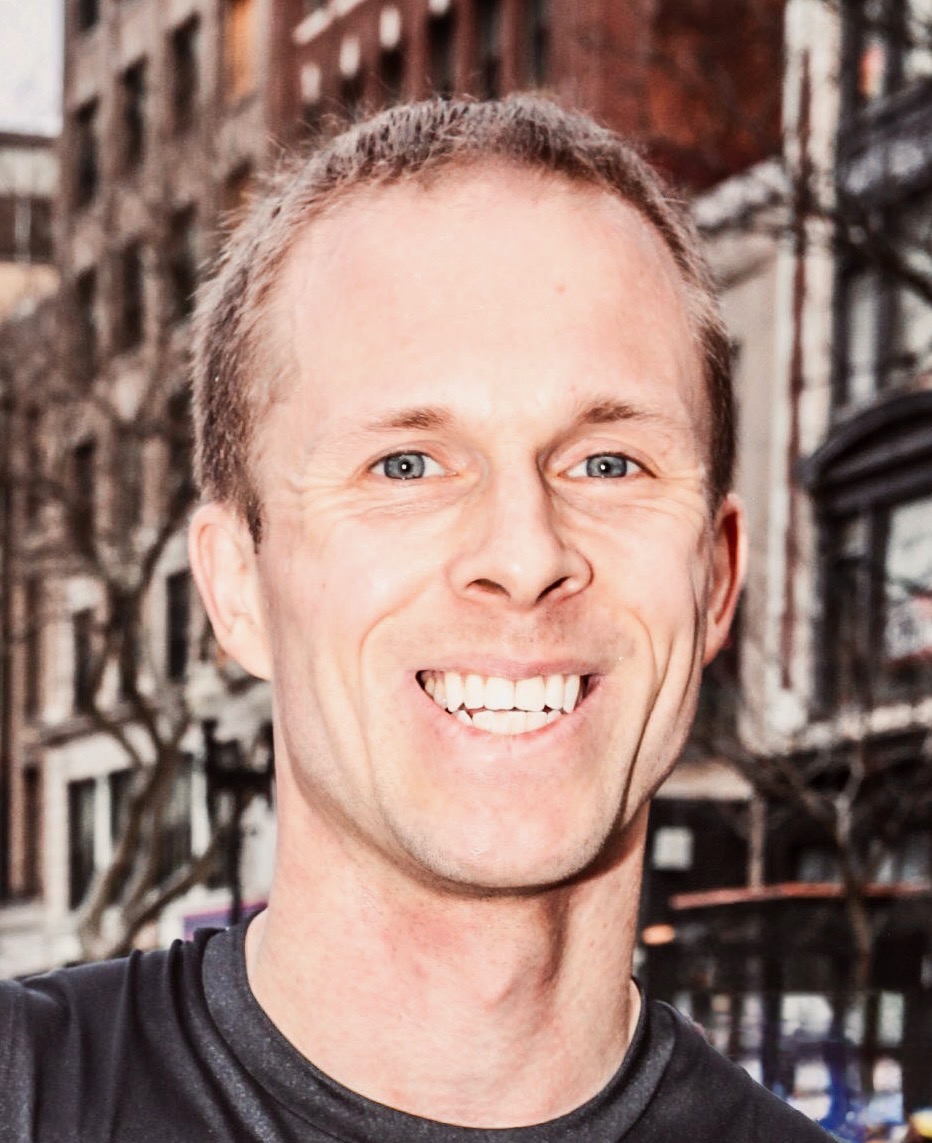 |
Nick Kearns Dissertation: Relocating Urban Lives: Negotiating Urban Identity and Urban Culture Beyond the City Email: nkearns23@aya.yale.edu Research Areas: Ethnography, Criminology, Poverty and Social Inequality, Urban Sociology, Rural Sociology Nick Kearns earned his Ph.D. in Sociology from Yale University in 2023. In his dissertation, he wrote about Puerto Rican men who moved away from various cities in the northeast, relocating to a town in a rural area of Western Massachusetts. By looking closely at their experiences of economic marginality, unemployment, and the drug market, he showed how those in America’s underclass can be structurally driven into crime. Other topics included fatherhood in the context of poverty, romantic relationships across different locations, the negotiation of urban identities in a rural area, and the spread of urban culture to a rural area. While Nick searches for a position on the academic job market, he continues to work toward the publication of his research. Adding the voices of African-American men and black men of Caribbean descent who had also relocated, as well as the voices of local white men who had grown up in his field site, he hopes to offer a fuller account of the contemporary rural drug market. The goals of his current writing in particular are: 1) to trace the development of the opioid epidemic in New England and 2) to examine the role that drug dealers from the city have played in facilitating its growth. |
|
|
|
Dissertation: The Social and Symbolic Boundaries of U.S. National Membership Email: keitaro.okura@yale.edu Website: www.keitarookura.com Research Areas: Immigration; Race/Ethnicity; Education; Inequality; Culture; Political Sociology; Health Fields of Interest: Racial and National Boundaries; Americanness; Nationalism; Panethnicity Keitaro Okura is a Ph.D. Candidate in Sociology at Yale University. His research examines the symbolic boundaries of national and ethnoracial group membership and their social consequences in the United States, drawing primarily on survey data and experiments. His work is published or forthcoming in the American Journal of Sociology, Sociology of Education, and International Migration Review, and has received multiple awards from the American Sociological Association and the American Educational Research Association. His research has been supported by the Time-sharing Experiments for the Social Sciences, the Russell Sage Foundation, the Rapoport Family Foundation, and the ASA’s Doctoral Dissertation Research Improvement Grant. |
|


|
|
Carlo Sariego Dissertation: Fertile Fantasies: Race, State Control, and the Politics of Transgender Reproduction Email: carlo.sariego@yale.edu Website: carlosariego.com Research Areas: Gender, Sexuality, Race and Ethnicity, Transgender studies, Political Sociology, Medical Sociology, Disability Studies Field of Interest: Queer and Feminist Movements, Sexuality, Qualitative Research, Science and Technology Studies, Transnational Feminism, Border Studies, Racial Nationalism, State Theory and Power Carlo Sariego is an interdisciplinary sociologist and PhD candidate in Sociology and Women’s, Gender, and Sexuality Studies at Yale University. Their research examines the racialized and gendered politics of reproduction, kinship, and the family, drawing from transgender studies, feminist science and technology studies, medical sociology, and disability theory. Using qualitative and queer/feminist methods, Carlo explores how shifting bodies and contested borders produce social consequences in the U.S. and transnationally. Their recent publications include a Signs article on reproductive coercion targeting Latina migrants across two political eras and a Feminist Theory article that proposes a transfeminist rethinking of pregnancy. You can find links to all their publications and CV on their website at carlosariego.com Carlo’s dissertation and book project, Fertile Fantasies: Race, State Control, and the Politics of Transgender Reproduction, traces the past, present, and speculative futures of trans fertility and reproductive politics in the United States. Based on 100+ interviews, archival research, and legal analysis, the project reframes reproduction as a site of political struggle and imaginative possibility shaped by anti-trans legislation, racialized fertility science, and queer kinship formations. In parallel, their research on immigration, disability, and reproductive governance has examined the U.S.-Mexico border as a reproductive regime and contributed to community-driven pedagogy through their work with Enduring Conditions, a Mellon-funded disability justice collaboratory. Born and raised in Miami, Florida, Carlo is Cuban American and trans—identities that inform their scholarly commitment to studying shifts in bodies, borders, and state power. They earned a BA from Sarah Lawrence College and an MPhil from the University of Cambridge, where they were part of the Reproductive Sociology Research Group (ReproSoc). At Yale, Carlo has designed and been the sole instructor on courses on critical sociology and queer science, served as a CRC Mellon Teaching Race Fellow, and co-led major academic and public-facing initiatives including the 2024 pre-conference at ASA on “Repro Futures” and the 2026 ESS Reproduction Mini-Conference. A Health Policy Research Scholar with the Robert Wood Johnson Foundation, they integrate policy analysis and public engagement into their scholarship. |
|

|
|
Dissertation: Transposing Privilege: Organizing an Afterschool Music Program Across Race and Class Email: jiwon.yun@yale.edu Website: www.jiwon-yun.com Research Areas: Racial and Ethnic Minorities; International Migration; Culture; Altruism, Morality, and Social Solidarity Fields of Interest: Organizational diversity; Intercultural interactions; Interracial solidarity; Nonprofit organizations Jiwon is interested in topics of race and ethnicity, migration, organizational diversity, and intercultural interactions. His projects are driven by this fundamental question: How do people work with each other across racial, ethnic, and cultural boundaries when they have little in common? To answer this question, he looks at various social arrangements that make different ideas, cultures and populations come into contact with each other. His current project explores how we can bring marginalized populations to sectors that have historically been inaccessible to them. It consists of an ethnography of a nonprofit organization that provides a tuition-free afterschool music program to overcome race- and class-based barriers to classical music. By looking at the obstacles that this organization faces, he seeks to uncover strategies that we can employ to combat structural barriers to access and, therefore, to organizational diversity. |
|